The Federal Government of Pakistan has announced several significant policy measures aimed at boosting the nation’s economy, supporting exporters, and providing relief to citizens.
These initiatives are focused on energy price reduction, export reforms, development spending, and enhanced oversight of state-owned enterprises.
To improve the competitiveness of exports, the government immediately abolished the 0.25% Export Development Surcharge (EDS), a move welcomed by exporters who considered it a financial burden. The Prime Minister has also directed the formation of an interim Steering Committee, with representation from the private sector, to oversee the utilization of the Rs 52 billion available in the Export Development Fund (EDF).
This committee will ensure the funds are exclusively spent on research and development (R&D), skill development, and competitiveness-enhancing activities. Furthermore, recommendations from a separate working group addressing the issue of a higher tax burden on export-oriented industries will be reviewed soon.
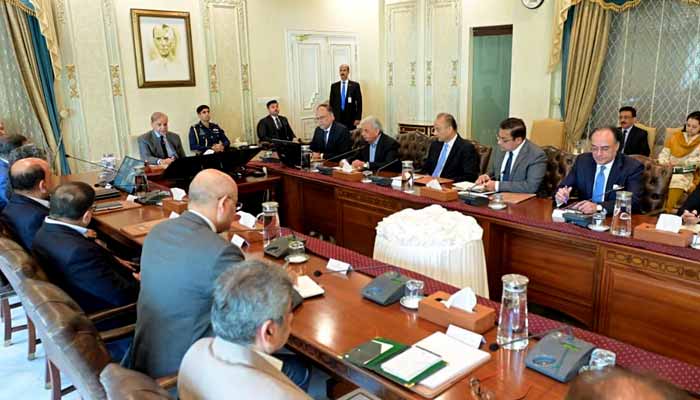
The Economic Coordination Committee (ECNEC), chaired by Deputy Prime Minister Ishaq Dar, approved development projects totaling over Rs 507 billion across various sectors. The largest approved project is the Emergency Polio Eradication Program (2026-2029), sanctioned at $639.54 million. This program is entirely dependent on external financing. Other approved schemes include the reconstruction of flood-affected schools in Sindh, the second phase of the Karachi Water and Sewerage Services Improvement Project, and key road projects, including the raising of the Mangla Dam.
Improved Oversight of State-Owned Enterprises (SOEs)
The Cabinet Committee on State-Owned Enterprises (CCoSOEs) approved the appointment of independent directors from the private sector to the boards of the National Bank of Pakistan (NBP), Port Qasim Authority (PQA), and Sui Northern Gas Pipelines Limited (SNGPL).
The committee also directed a comprehensive review of pending court cases involving state enterprises designated for privatization to streamline the privatization process.
These actions signal the government’s renewed focus on economic growth, reform, and public welfare.