
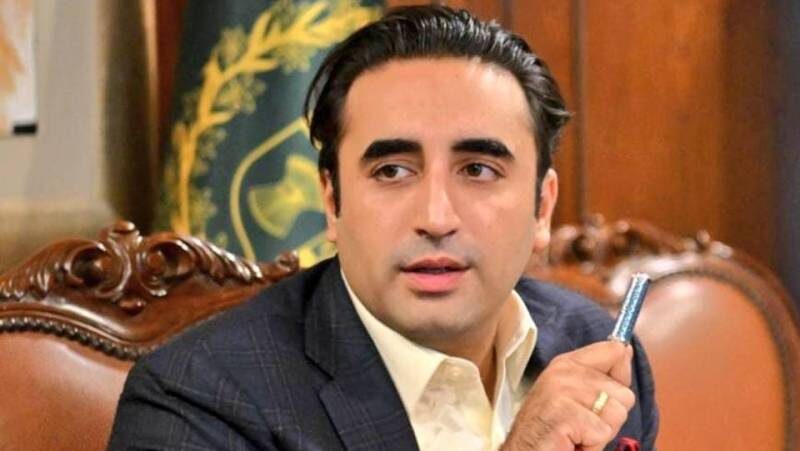
In a major political development, Pakistan People’s Party (PPP) Chairman Bilawal Bhutto Zardari has revealed that a delegation from the Pakistan Muslim League-Nawaz (PML-N), led by Prime Minister Shehbaz Sharif, met with President Asif Ali Zardari and Bilawal to seek the PPP’s support for the 27th Constitutional Amendment.
Bilawal stated on Monday that the proposed amendment includes several key provisions, such as the establishment of constitutional courts, the restoration of executive magistrates, the transfer and rotation of judges, and the removal of existing protections for provincial shares under the National Finance Commission (NFC). It also proposes an amendment to Article 243, which relates to the command of the armed forces.
He added that the amendment also seeks to bring education and population planning back under federal authority, which are currently provincial subjects. Another clause aims to resolve the deadlock over appointments in the Election Commission of Pakistan (ECP).
Bilawal further announced that after President Zardari’s return from Doha on November 6, the PPP Central Executive Committee (CEC) will meet at Bilawal House in Karachi to decide the party’s official position on the proposed amendment. The meeting will also review the overall political situation in the country.
Last year, the government passed the 26th Constitutional Amendment amid strong controversy, which the Pakistan Tehreek-e-Insaf (PTI) criticized, accusing the government of coercing its lawmakers to support the bill. Although the 26th Amendment is still pending in court, discussions in Islamabad’s political circles are now centred on the 27th Amendment, which the government says is aimed at improving the structure and functioning of the judiciary.
Previously, Deputy Prime Minister Ishaq Dar had rejected the need for any such amendment, and Bilawal Bhutto Zardari had also dismissed reports of it as “baseless.” However, the PTI has strongly opposed the proposed amendment, while the Islamabad High Court Bar Association (IHCBA) has expressed its support, calling it a much-needed step toward judicial reforms.