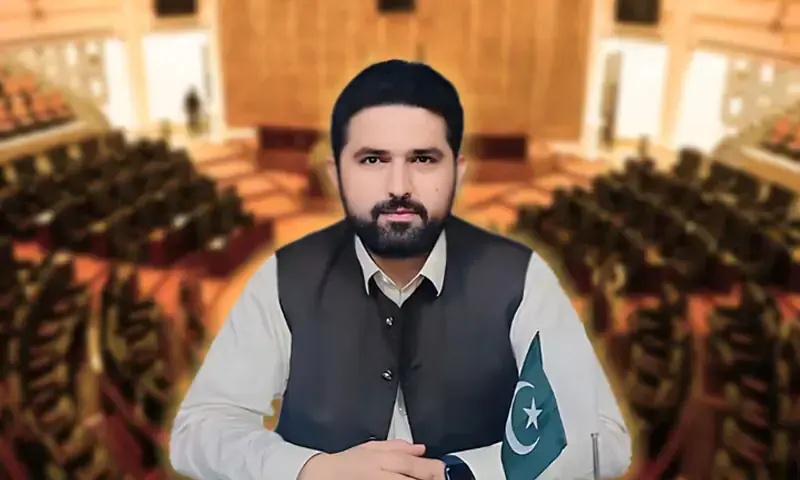
The formation of Chief Minister Sohail Afridi’s initial cabinet in Khyber Pakhtunkhwa (KP) was marked by a complex and intriguing scenario of intense political pressure and lobbying both before and after its official announcement.
Initial Consultations and Khan’s Mandate
On October 30th, CM Sohail Afridi chaired a crucial meeting focused on cabinet formation. As the cabinet had yet to be formed, the attendees were members of Afridi’s inner circle.
An MPA from Khyber proposed including both new and experienced members.
An MPA from the Southern Districts opposed this, revealing that those who had met Imran Khan (his sisters and Party Secretary General Salman Akram Raja) conveyed Khan’s desire for a new cabinet composed of fresh faces.
After extensive deliberation, the initial plan was to form a cabinet with 8 Ministers, 2 Advisors, and 1 Special Assistant.
Key Leaders Intervene and Force Inclusions
According to a former provincial minister, the news of the 12-member cabinet leak caused a stir among senior party leaders.
Asad Qaiser and Shahram Tarakai abruptly arrived at the meeting.
Qaiser immediately stressed the need for consultation with the central leadership on cabinet formation.
Another participant confirmed that both leaders were lobbying to secure positions for their respective brothers, who were excluded from the initial list: Qaiser for his brother, Aqibullah, and Tarakai for his younger brother, Faisal Tarakai.
On October 31st, CM Sohail Afridi announced a 13-member initial cabinet, comprising 10 Ministers, 2 Advisors, and 1 Special Assistant. Bowing to the pressure, the list included both Tarakai’s brother, Faisal Tarakai, and Qaiser’s brother, Aqibullah.
Intense Lobbying for Cabinet Seats
A prominent cabinet member disclosed that Afridi faced severe pressure for inclusions, especially from his close circles and Meena Khan Afridi. Lobbying efforts were widespread:
Atif Khan pushed for his associate Tariq Aryani.
Provincial President Junaid Akbar lobbied for Shakeel Khan.
Former CM Ali Amin Gandapur advocated for his four aides: Sajjad Barikwal, Muzammil Aslam, Peer Musawar Shah, and Pakhtunyar.
The central leadership sought posts for Taimur Saleem Jhagra and Kamran Bangash.
KP Assembly Speaker Babar Saleem Swati exerted pressure on behalf of the Hazara Group.
The initial cabinet was heavily reliant on previous experience: 10 members were from the Ali Amin Gandapur cabinet, two had served under Mahmood Khan, and only Shafi Jan was a genuinely new face.
Portfolio Allocation Struggle
Portfolio distribution also witnessed a fierce struggle, particularly for the four major development departments: Local Government, Irrigation, C&W (Communication and Works), and Public Health.
Afridi’s close confidante, Meena Khan Afridi, received the Local Government portfolio.
Yousaf Ayub’s younger brother was given Elementary and Secondary Education, despite his preference for the Works Department.
Public Health went to Fazal Shakoor, and Excise to Fakhar Jahan.
Khaliqur Rahman received Health and Amjad Ali was given Housing.
Despite Asad Qaiser’s rigorous lobbying for the C&W department for Aqibullah, Afridi instead assigned him the Settlement Department, and Faisal Tarakai the Labour Department.
Vacant Slots Await Khan’s Nod
Under the 18th Amendment and FATA merger, the KP cabinet can have a maximum of 15 Ministers, 5 Advisors, and dozens of Special Assistants.
Five Ministerial, three Advisor, and a dozen Special Assistant slots remain vacant, for which lobbying is ongoing.
Key departments lacking ministers include C&W, Forests, Higher Education, Food, Planning & Development, Energy, Mines, Agriculture, and Social Welfare.
A former minister noted that the longer Afridi delays the expansion, the more pressure he will face. CM Afridi is reportedly compelled to meet Imran Khan to seek his approval and relieve the pressure. It is anticipated that Khan will raise few objections to the names Afridi ultimately presents. However, before approaching Khan, Afridi is believed to have consulted with his political mentor, Murad Saeed.