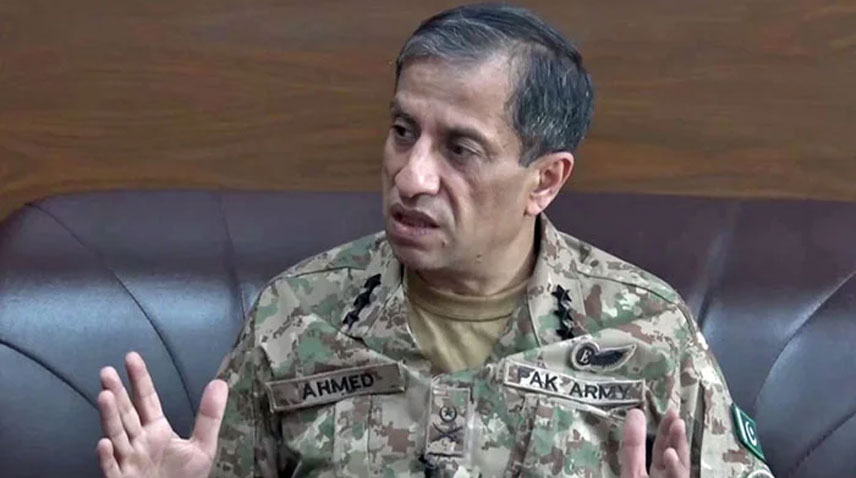
In an informal conversation with journalists, Director General Inter-Services Public Relations (DG ISPR), Lieutenant General Ahmed Sharif Chaudhry, provided a detailed overview of Pakistan’s current security situation and policy matters, delivering strong warnings to both Afghanistan and India.
Stern Warning to India: Escalated Retaliation
General Chaudhry issued a clear and stern warning to India, stating that New Delhi is preparing for another “false flag operation” in the deep sea. He cautioned India that whatever actions it takes on land, sea, or air, it must know that Pakistan’s response this time will be “far more severe” than in the past.
Condemnation of Afghan Soil Use and TTP Link
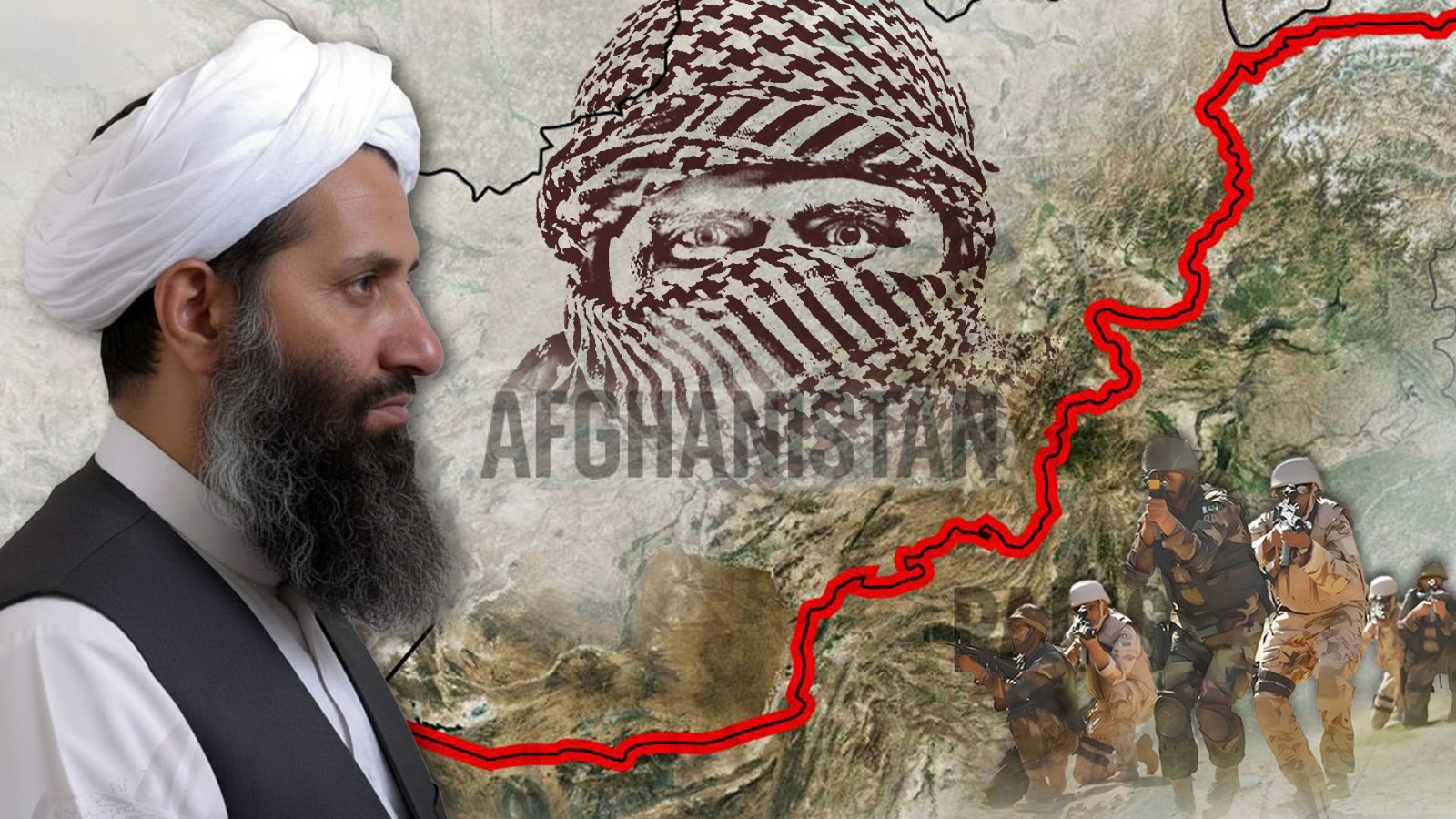
The DG ISPR maintained an uncompromising stance on the situation with Afghanistan, asserting that Pakistan’s one-point agenda is the cessation of the use of Afghan soil against it.
He dismissed any conditions set by Afghanistan as meaningless, emphasising that the most crucial issue is the elimination of terrorism. General Chaudhry revealed that the Tehrik-i-Taliban Pakistan (TTP) has pledged allegiance to the Amir of the Afghan Taliban, effectively making the TTP a “branch of the Afghan Taliban.”
A grave concern highlighted was that the Afghan Taliban is settling “Fitna al-Khawarij” terrorists in densely populated areas to provide them with a security shield. He disclosed that during recent Pakistan-Afghan border tensions, 206 Afghan Taliban and 112 “Fitna al-Khawarij” were killed. Alarmingly, 60% of the eliminated terrorists were identified as Afghan residents who had infiltrated in the last three to four months.
Counter-Terrorism Operations and Drug Smuggling
Providing statistics on the ongoing war against terror, General Chaudhry noted a total of 62,113 operations were conducted this year, primarily in Balochistan. In the ongoing operations against Fitna al-Khawarij, 1,667 terrorists have been killed to date. Tragically, 582 soldiers were martyred in these operations.
He linked drug smugglers’ intervention in Afghan politics to large-scale narcotics smuggling into Pakistan, pointing out that terrorists also collect taxes in the name of Ushr (tithe). Operations in the Tirah Valley destroyed opium crops, and in Khyber Pakhtunkhwa, 12,000 acres of poppy were cultivated, involving local politicians and people. The estimated profit per acre of poppy is reported to be between Rs 1.8 million and Rs 3.2 million. He asserted that the Afghan Taliban protects these terrorists because the poppy is transported to Afghanistan, where it is used to manufacture ‘Ice’ (methamphetamine) and other narcotics.
Commitment to Defence and Policy Autonomy
General Chaudhry reiterated Pakistan’s commitment to border security, stating the country is fully prepared to defend its people and borders. He firmly stated that the army does not wish to be embroiled in politics and must be kept away from it in all circumstances. Administrative decisions, such as imposing Governor’s Rule, remain the authority of the government.
Regarding a potential deployment of peacekeeping forces to Gaza, he clarified that this significant decision rests with the government and the Parliament, affirming that Pakistan is, and will remain, sovereign in its policymaking.
Educational Landscape
General Chaudhry also touched upon educational reforms, mentioning that the number of Madrassas (religious schools) has surged from 48,000 in 2014 to over 100,000 today.
He concluded by expressing the hope that issues with Afghanistan would be resolved, emphasising that Pakistan’s response to security threats would be swift.