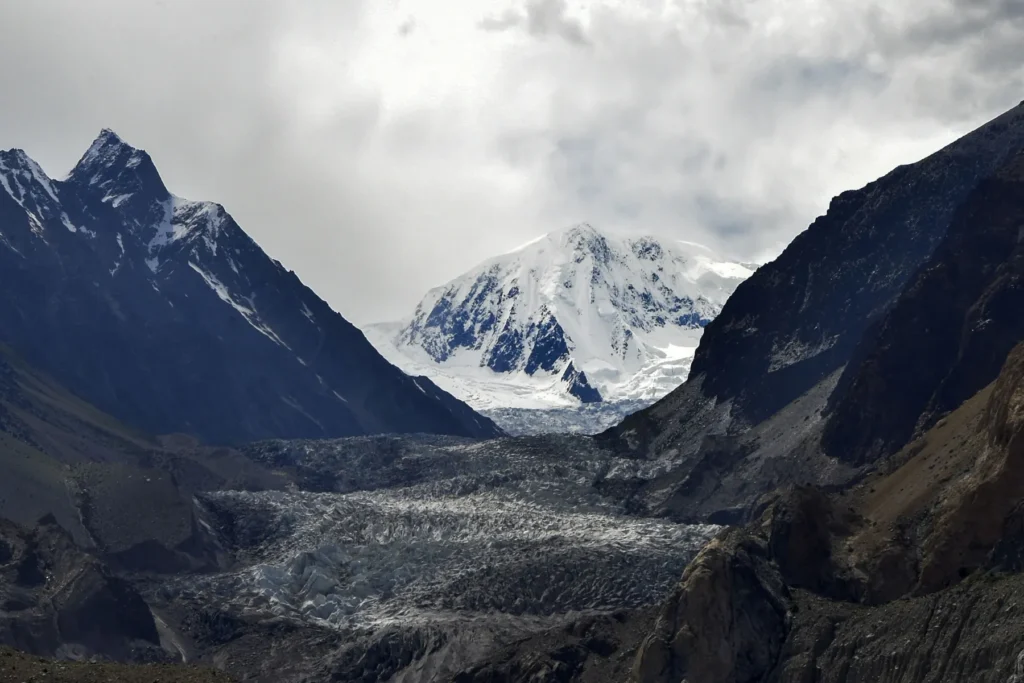
The Green Climate Fund (GCF) has approved $250 million for a major program to build sustainable water and agriculture systems in regions of Central Asia, the South Caucasus, and Pakistan that rely on glaciers. The funding will help communities in these areas improve their climate resilience.
The Asian Development Bank (ADB) is leading the “Glaciers to Farms” program, which involves nine developing member countries: Armenia, Azerbaijan, Georgia, Kazakhstan, Kyrgyzstan, Pakistan, Tajikistan, Turkmenistan, and Uzbekistan. These countries depend on glacier-fed rivers for agriculture, domestic water supply, and electricity.
The funding was approved at the 43rd Board meeting of the Green Climate Fund on October 29.
The program will focus on four major glacier-fed river basins: Naryn and Panj in Central Asia, Kura in the South Caucasus, and Swat in Pakistan. It will cover an area of approximately 27 million hectares.
It is expected to benefit around 13 million people, including farmers and vulnerable communities in mountain areas.
The program will support climate and glacier assessments, which will be integrated into national development plans. It will also strengthen monitoring and early warning systems to address risks such as glacial lake outburst floods (GLOFs) and prolonged droughts.
Most of the GCF funding will be provided as grants. Over the next 10 years, it will be used alongside $3.25 billion in ADB investments to improve irrigation systems, water storage, and watershed management. This will help increase agricultural productivity even as glaciers melt.
Yasmin Siddiqui, ADB Director, said the rapid melting of glaciers is a complex development challenge for the region. She added that the program will provide science-based solutions to help communities build long-term resilience.